
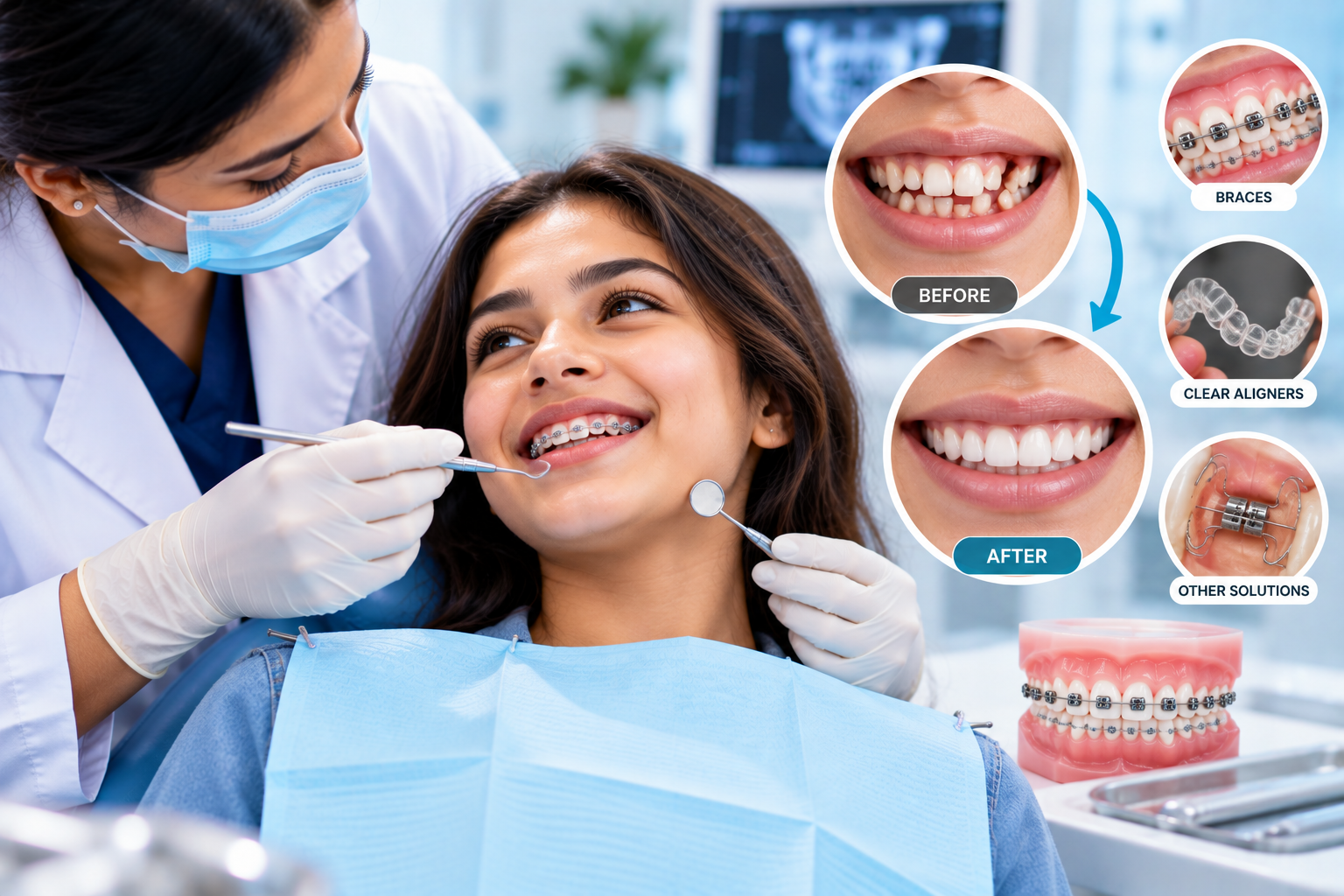
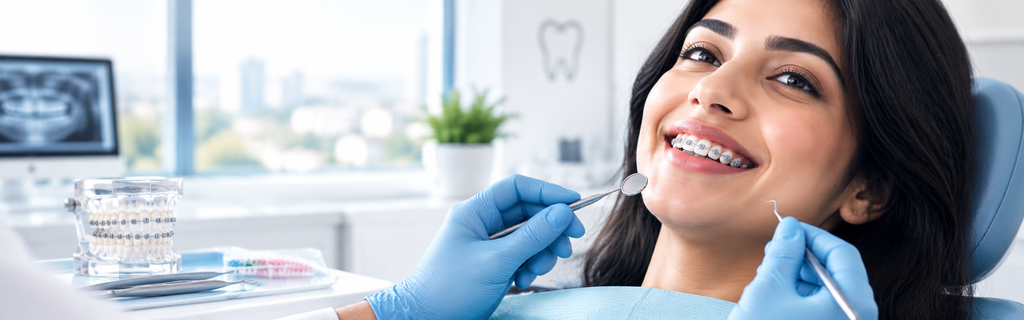
Orthodontics is a specialized branch of dentistry that focuses on diagnosing, preventing, and treating misaligned teeth and jaw irregularities. Orthodontic treatment helps improve the position of teeth, correct bite problems, and create a healthy, well-aligned smile. Using advanced treatment options such as braces, clear aligners, and retainers, orthodontics enhances both dental function and facial aesthetics while promoting long-term oral health.
The Role of Orthodontics
Orthodontics plays an important role in improving the alignment of teeth and jaws, making it easier to chew, speak, and maintain proper oral hygiene. Straight teeth are easier to clean, reducing the risk of tooth decay and gum disease. Orthodontic treatment also improves bite function, minimizes excessive wear on teeth, and enhances overall smile confidence. Early diagnosis and timely treatment can prevent more complex dental problems in the future.
Orthodontic Services Offered at Our Dental Clinic in Kochi
Metal Braces
Traditional metal braces are one of the most effective and reliable orthodontic treatments for correcting crooked teeth, spacing issues, and bite problems. They gradually move teeth into their ideal positions using brackets and wires.
Key Points:
- Corrects complex tooth alignment problems
- Suitable for children, teenagers, and adults
- Highly effective treatment option
- Improves bite and smile appearance
- Durable and reliable results
Ceramic Braces
Ceramic braces function similarly to metal braces but use tooth-coloured or clear brackets that blend naturally with your teeth, making them a more discreet orthodontic option.
Key Points:
- Less noticeable than metal braces
- Corrects various orthodontic issues
- Comfortable and effective treatment
- Natural-looking appearance
- Suitable for adults and teenagers
Clear Aligners
Clear aligners are transparent, removable trays that gradually straighten teeth without the use of metal brackets or wires. They provide a comfortable and discreet alternative for eligible patients.
Key Points:
- Nearly invisible appearance
- Removable for eating and cleaning
- Comfortable to wear
- Easy oral hygiene maintenance
- Customized treatment planning
Retainers
Retainers are custom-made appliances used after orthodontic treatment to maintain the new position of teeth and prevent them from shifting back.
Key Points:
- Maintains orthodontic results
- Prevents teeth from moving
- Custom-fitted for comfort
- Available as removable or fixed retainers
- Supports long-term smile stability
Early Orthodontic Assessment
Early orthodontic evaluation helps identify developing bite and jaw problems in children, allowing timely intervention when necessary.
Key Points:
- Early detection of orthodontic problems
- Monitors jaw development
- Guides proper tooth eruption
- Prevents future complications
- Supports healthy dental growth
Bite Correction
Orthodontic treatment corrects bite irregularities such as overbite, underbite, crossbite, and open bite to improve function and comfort.
Key Points:
- Corrects bite alignment
- Improves chewing efficiency
- Reduces jaw strain
- Enhances speech function
- Promotes balanced facial appearance
Space Management
Space maintainers and orthodontic appliances help preserve or create adequate space for permanent teeth to erupt properly.
Key Points:
- Maintains space after early tooth loss
- Supports proper tooth eruption
- Prevents crowding
- Guides healthy dental development
- Reduces future orthodontic needs
Benefits of Orthodontic Treatment
Orthodontic treatment improves both the appearance and function of your teeth. Properly aligned teeth are easier to clean, function more efficiently, and contribute to better overall oral health. A well-aligned smile also boosts confidence and reduces the risk of future dental complications.
Benefits are:
- Straighter teeth
- Improved smile appearance
- Better bite alignment
- Easier brushing and flossing
- Reduced risk of tooth decay
- Lower risk of gum disease
- Improved chewing ability
- Clearer speech
- Prevention of uneven tooth wear
- Better jaw function
- Increased self-confidence
- Improved facial aesthetics
- Long-term oral health
- Enhanced quality of life
Common Orthodontic Problems Treated
Orthodontic treatment helps correct a wide range of dental and bite problems, including:
- Crooked teeth
- Crowded teeth
- Gaps between teeth
- Overbite
- Underbite
- Crossbite
- Open bite
- Rotated teeth
- Jaw alignment issues
- Improper tooth spacing
- Protruding teeth
- Misaligned bite
How Does Orthodontics Differ from Other Dental Specialties?
Orthodontics specifically focuses on correcting the alignment of teeth and jaws. While general dentistry is concerned with maintaining overall oral health through preventive and restorative care, orthodontics is dedicated to improving tooth positioning and bite function. Unlike cosmetic dentistry, which primarily enhances the appearance of teeth, orthodontic treatment addresses both functional and aesthetic concerns by correcting the underlying alignment of the teeth and jaws.
When Should You Visit an Orthodontist?
You should consider an orthodontic consultation if you have crooked teeth, crowded teeth, gaps, bite problems, or difficulty chewing. Children should have their first orthodontic evaluation by around the age of seven to identify any developing issues early. Adults can also benefit from orthodontic treatment at any age if they wish to improve their smile, bite, or oral function.
Advanced Procedures in Orthodontics
Digital Orthodontic Evaluation – Advanced digital technology is used to accurately assess tooth alignment and bite relationships.
3D Orthodontic Treatment Planning – Three-dimensional imaging helps create personalized treatment plans for predictable outcomes.
Metal Braces – Traditional braces effectively treat mild to complex orthodontic problems.
Ceramic Braces – Tooth-coloured braces offer a more discreet alternative while delivering excellent results.
Clear Aligner Therapy – Transparent removable aligners gradually straighten teeth with improved comfort and convenience.
Interceptive Orthodontics – Early treatment in children helps guide jaw growth and reduce future orthodontic complications.
Retainers – Custom retainers maintain teeth in their corrected positions after treatment.
Space Maintainers – Preserve space for permanent teeth following premature loss of baby teeth.
Bite Correction Therapy – Addresses overbite, underbite, crossbite, and open bite to improve oral function.
Growth Modification Appliances – Specialized orthodontic appliances guide jaw development in growing children where clinically appropriate.
Why Orthodontics is Important for Your Overall Oral Health
Orthodontic treatment is about more than achieving a beautiful smile. Properly aligned teeth are easier to clean, reducing the risk of cavities, gum disease, and plaque buildup. Correcting bite problems also helps prevent excessive tooth wear, jaw discomfort, and speech difficulties. By improving both function and aesthetics, orthodontics supports long-term oral health, better chewing efficiency, and greater confidence in your smile.
Frequently Asked Questions (FAQ’s)
1. At what age should orthodontic treatment begin?
Children should ideally have an orthodontic evaluation around the age of seven. However, orthodontic treatment can be effective for teenagers and adults as well.
2. Are braces painful?
You may experience mild discomfort for a few days after braces are placed or adjusted, but this usually resolves quickly.
3. What are clear aligners?
Clear aligners are transparent, removable trays that gradually move teeth into proper alignment without metal brackets or wires.
4. How long does orthodontic treatment take?
Treatment duration varies depending on the complexity of the case but typically ranges from 12 to 24 months.
5.How often should I visit my orthodontist during treatment?
Most patients require follow-up appointments every 4–8 weeks, depending on their treatment plan.