
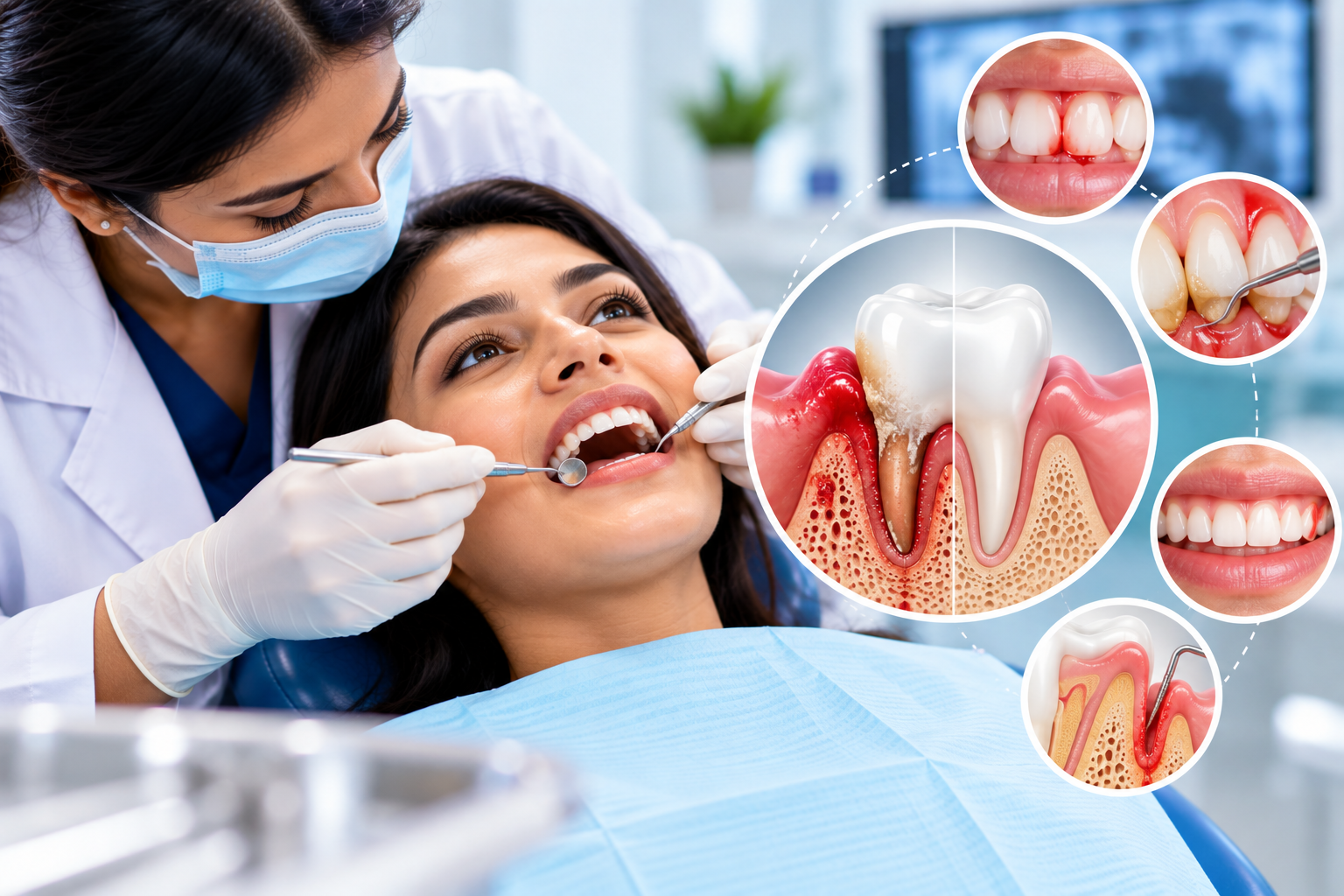

Periodontics is the branch of dentistry that focuses on the prevention, diagnosis, and treatment of gum diseases and the supporting structures of the teeth. Healthy gums are essential for maintaining strong teeth and overall oral health. Periodontal care helps manage conditions such as gingivitis, periodontitis, gum recession, and other gum-related problems while preserving natural teeth and preventing tooth loss. With early diagnosis and appropriate treatment, periodontics helps restore gum health, improve oral function, and maintain a healthy smile.
The Role of Periodontics
Periodontics plays a vital role in protecting the gums, jawbone, and tissues that support your teeth. Gum disease often develops silently, showing few symptoms until it becomes advanced. Regular periodontal examinations help identify gum problems early, allowing timely treatment before permanent damage occurs. Healthy gums not only support strong teeth but also contribute to better overall oral health and long-term smile preservation.
Periodontal Services Offered at Our Dental Clinic in Kochi
Gum Disease Evaluation
A comprehensive periodontal examination helps detect early signs of gum disease, assess gum health, and determine the most appropriate treatment plan.
Key Points:
- Comprehensive gum health assessment
- Early detection of periodontal disease
- Measurement of gum pockets
- Evaluation of bone support
- Personalized treatment planning
Scaling and Root Planing (Deep Teeth Cleaning)
Scaling and root planing is a non-surgical periodontal treatment that removes plaque, tartar, and bacteria from below the gum line. It helps reduce gum inflammation and promotes healthy gum attachment.
Key Points:
- Removes plaque and tartar below the gums
- Treats early and moderate gum disease
- Reduces gum inflammation
- Promotes gum healing
- Prevents disease progression
Professional Dental Scaling
Professional dental scaling removes hardened plaque and tartar deposits that cannot be eliminated through regular brushing and flossing. It helps maintain healthy gums and prevents periodontal disease.
Key Points:
- Removes plaque and tartar buildup
- Improves gum health
- Prevents gingivitis
- Freshens breath
- Supports long-term oral hygiene
Gum Infection Management
Gum infections can cause pain, swelling, bleeding, and bad breath if left untreated. Periodontal treatment helps eliminate infection and restore healthy gum tissues.
Key Points:
- Controls bacterial infection
- Reduces gum swelling
- Relieves discomfort
- Improves gum health
- Prevents further complications
Periodontal Maintenance Therapy
Patients who have undergone periodontal treatment require regular maintenance visits to monitor gum health and prevent the recurrence of gum disease.
Key Points:
- Maintains healthy gums
- Prevents recurrence of gum disease
- Regular professional cleaning
- Monitors periodontal health
- Supports long-term treatment success
Supportive Care for Dental Implants
Healthy gums are essential for the long-term success of dental implants. Periodontal care helps maintain healthy tissues around implants and reduces the risk of peri-implant disease.
Key Points:
- Maintains healthy implant-supporting tissues
- Prevents peri-implant infections
- Regular implant maintenance
- Protects implant stability
- Supports long-term implant success
Benefits of Periodontal Treatment
Periodontal treatment helps maintain healthy gums, preserve natural teeth, and prevent complications associated with gum disease. Healthy gums provide the foundation for strong teeth and contribute significantly to long-term oral health.
Benefits are:
- Healthy gums
- Prevention of tooth loss
- Reduced gum bleeding
- Elimination of gum infection
- Fresher breath
- Reduced plaque and tartar buildup
- Improved oral hygiene
- Stronger support for teeth
- Reduced tooth sensitivity
- Better chewing comfort
- Improved smile appearance
- Protection of jawbone health
- Long-term oral health maintenance
- Improved overall well-being
Common Gum Problems Treated by Periodontists
Periodontal treatment helps manage various gum-related conditions, including:
- Gingivitis
- Periodontitis
- Bleeding gums
- Swollen gums
- Gum recession
- Persistent bad breath
- Loose teeth caused by gum disease
- Plaque buildup
- Tartar accumulation
- Gum infections
- Deep periodontal pockets
- Bone loss associated with periodontal disease
How Does Periodontics Differ from Other Dental Specialties?
Periodontics specifically focuses on the health of the gums, jawbone, and supporting tissues surrounding the teeth. While general dentistry provides preventive and restorative dental care, periodontics specializes in preventing, diagnosing, and treating gum diseases. It also plays an important role in maintaining healthy tissues around dental implants and preserving natural teeth through specialized periodontal care.
When Should You Visit a Periodontist?
You should consider visiting a periodontist if you notice bleeding gums, swollen or tender gums, persistent bad breath, gum recession, loose teeth, or discomfort while chewing. Individuals with diabetes, smokers, or those with a family history of gum disease may also benefit from regular periodontal evaluations. Early diagnosis and treatment can prevent advanced gum disease and tooth loss.
Advanced Procedures in Periodontics
Comprehensive Periodontal Examination – A detailed evaluation of gum health, periodontal pockets, and supporting bone structures.
Scaling and Root Planing – Deep cleaning below the gum line to remove plaque, tartar, and bacteria.
Laser-Assisted Periodontal Therapy – Advanced laser technology may be used in selected cases to treat infected gum tissues with minimal discomfort.
Gum Recession Management – Treatment aimed at protecting exposed tooth roots and improving gum health.
Periodontal Maintenance Therapy – Regular follow-up care to prevent recurrence of gum disease.
Pocket Reduction Therapy – Reduces deep periodontal pockets to improve gum attachment and oral hygiene.
Dental Implant Maintenance – Specialized care to maintain healthy gums around dental implants.
Antimicrobial Periodontal Therapy – Local antimicrobial treatment may be used alongside periodontal care to control bacterial infection where clinically indicated.
Bone Regeneration Procedures – In selected cases, regenerative techniques may help restore bone lost due to periodontal disease.
Soft Tissue Grafting – Gum grafting procedures may be recommended to treat advanced gum recession when appropriate.
Why Periodontics is Important for Your Overall Oral Health
Healthy gums are the foundation of a healthy smile. Without proper periodontal care, gum disease can gradually damage the tissues and bone supporting your teeth, eventually leading to tooth loss. Regular periodontal examinations and timely treatment help preserve natural teeth, improve oral hygiene, and support long-term dental health. Maintaining healthy gums also contributes to better chewing function, fresher breath, and greater confidence in your smile.
Frequently Asked Questions (FAQ’s)
1. What are the early signs of gum disease?
Common early signs include bleeding gums, swollen or red gums, bad breath, gum tenderness, and mild gum recession.
2. Is scaling and root planing painful?
The procedure is generally performed under local anesthesia to ensure patient comfort. Mild sensitivity may occur afterward but usually resolves quickly.
3. Can gum disease be cured?
Early-stage gum disease (gingivitis) can often be reversed with proper treatment and good oral hygiene. Advanced periodontitis can be managed effectively to prevent further damage.
4. Can gum disease cause tooth loss?
Yes. Untreated periodontal disease can damage the supporting bone and tissues, eventually leading to loose teeth and tooth loss.
5. How can I prevent gum disease?
Maintaining good oral hygiene, brushing twice daily, flossing regularly, avoiding tobacco, eating a balanced diet, and attending routine dental checkups can significantly reduce the risk of gum disease.